What Emotional Regulation Actually Means
Have you ever been told to “calm down” when you were already overwhelmed? Or been told to “control your emotions” when you were angry, anxious, or upset? I think most of us have
heard these words at some point. For the longest time, I thought emotional regulation meant exactly that, controlling how I felt. If I was angry, I should calm down. If I was sad, I should
stop thinking about it. If I was anxious, I should somehow make myself feel better.
As someone pursuing my Master’s in Counselling Psychology, I have come across the term emotional regulation many times. I have studied emotions, how they influence our thoughts and behaviours, and how we cope with them. But understanding something academically
and actually noticing it in your own life are two very different things. The more I understood emotional regulation, the more I realised that it was not about controlling my
emotions. It was about learning how to understand them and respond to them.
We Are Not Supposed to Stop Feeling
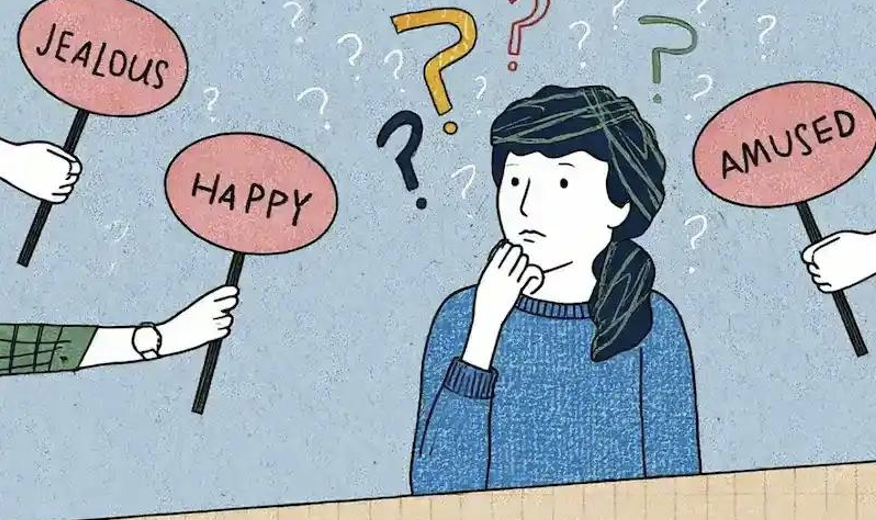
We experience emotions every single day. Some are easy to accept, while others make us uncomfortable. We are usually happy to feel excited, proud or joyful, but when anger, sadness, jealousy, fear or disappointment comes up, we are much quicker to push them away.
We have to convince ourselves, “I shouldn’t feel this way.”
I wonder why I’m still angry?
“Just calm down.”
“Don’t overthink it.”
Emotions don’t simply go away because we say “no,” to them.
It’s something I’ve been seeing more of in my life. At times, I notice when I am feeling irritated, overwhelmed or anxious and I want to get rid of it but my first reaction is to try to get rid of the feeling rather than understand it. This is where I found I knew emotional regulation isn’t about the elimination of emotions. It means being aware of how I am feeling,
understanding why I might be feeling that way and then deciding how to respond.We may not be able to control how we feel, but we can learn more control over how we respond to the feeling.
Think about anger. Being angry can be a good thing. When you become angry, the way you
respond by shouting, saying something hurtful or acting impulsively can cause a problem. Likewise, not feeling anxious is not a mistake. However, it becomes hard to make decisions or avoid doing what we fear if we allow our anxiety to take over.
There is an inner emotion, but a different response to the emotion.
Perhaps that’s where we’re having to think differently about emotional regulation. What does it mean to be emotionally regulated and why is calmness assumed? A person may seem
perfectly relaxed on the outside but be very upset on the inside. Sometimes controlling an emotion could be as simple as crying, saying that you’re hurt, or seeking someone’s help. Regulated does not always mean composed.
The Space Between Feeling and Reacting
I think this is one of the most important things I have learned about emotional regulation.
There is a difference between reacting to an emotion and responding to it.
Sometimes the reaction happens so quickly that we do not even realise we had a choice.
We get angry, and we immediately reply.
We feel hurt, and we withdraw.
We feel overwhelmed, and we avoid the task completely.
We feel insecure, and we start comparing ourselves to someone else.
The emotion happens, and our behaviour follows almost automatically. Emotional regulation
gives us a little space between the two. That space does not have to be something complicated. It could mean taking a few breaths before responding, stepping away from a situation, writing down what you are feeling, talking to someone you trust, or simply asking yourself, “What am I actually feeling right now?”
Sometimes even naming the emotion can help us understand what is happening.And this is
also where I think emotional regulation is very different from emotional suppression.
Suppression is more like telling yourself, “I shouldn’t feel this. I need to stop feeling this.”
Regulation is more like saying, “I am really angry right now. Let me understand why before I
decide what to do.”
One pushes the emotion away.
The other makes space for it.
I can be angry without shouting.
I can be anxious and still do what I need to do.
I can be hurt without intentionally hurting someone else.
I can feel overwhelmed and still ask for help.
The goal is not to become emotionless. The goal is to experience the emotion without allowing it to completely take over our behaviour.
What I Am Still Learning
Studying psychology does not mean that I have suddenly figured out all my emotions. If
anything, it has made me more aware of them.
I have started noticing the difference between saying, “I am angry” and saying, “I am feeling
angry right now.” That small change in the way I describe the experience reminds me that an emotion is something I am experiencing. It is not my entire identity, and it does not have to decide what I do next.
I am also learning that emotional regulation does not look the same every day. Some days,
regulating myself might mean talking to someone. On another day, it might mean taking some time alone. Sometimes it could be journaling, going for a walk, listening to music, crying, resting, or simply giving myself enough time to process what happened.
There is no perfect way to regulate every emotion.
And maybe that is something we need to remind ourselves more often.
Being emotionally healthy does not mean being calm all the time. It does not mean never getting angry, never crying, never feeling anxious or never becoming overwhelmed.We are human. Maybe emotional regulation is not about feeling less. Maybe it is about learning to feel without being controlled by everything we feel.
As I continue learning about counselling psychology, this is something I want to carry with me both personally and professionally. Emotions are not problems that always need to be fixed. Sometimes they are signals that need to be understood.
So the next time you feel overwhelmed, instead of immediately asking yourself, “How do I stop feeling this?”, maybe pause and ask,
“What is this feeling trying to tell me?”
Because emotional regulation does not begin when the emotion disappears.
About the author

Ms.Adiba Zaynah,
I’m Adiba Zaynah, an emerging counselling psychologist drawn to the quieter side of psychology; the emotions we hide, the patterns we repeat, and the stories we tell ourselves.
I love exploring nature, observing the world around me, and finding meaning in the little things.